With teenage pregnancy prevalence reaching 11.7% and rural figures significantly higher than urban levels, Jharkhand faces a troubling question: Are enough opportunities being created for young girls to complete their education, protect their health and make informed decisions about their futures?
Ranchi: Childhood is supposed to be a period of learning, growing and discovering possibilities. But for many adolescent girls in Jharkhand, this phase of life is increasingly being interrupted by circumstances that bring adult responsibilities far too early. Teenage pregnancy, which is often discussed primarily as a medical concern, reflects a much deeper social challenge involving early marriage, educational inequalities, inadequate nutrition and limited access to reproductive healthcare.
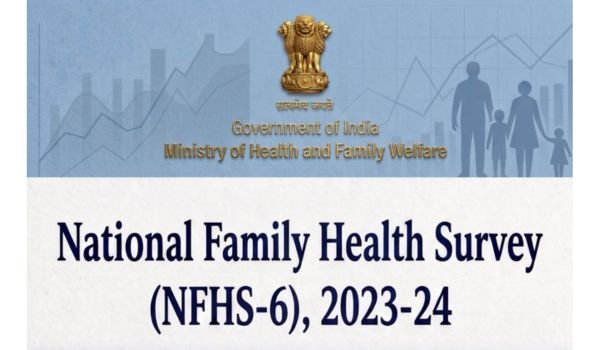
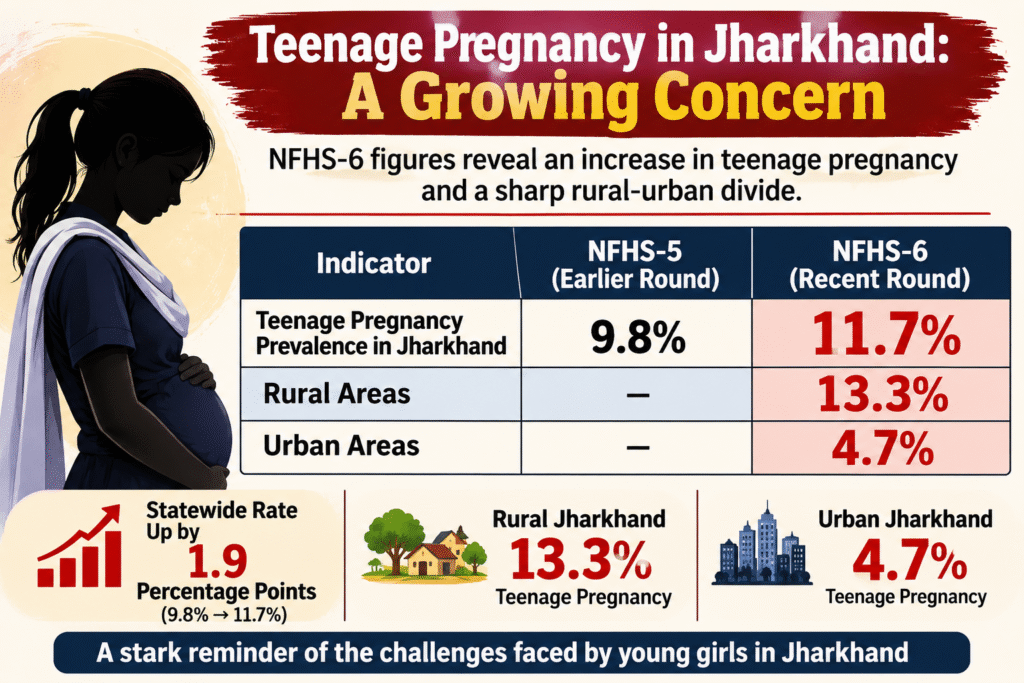
The reported figures attributed to the National Family Health Survey-6 (NFHS-6) present a worrying picture. Teenage pregnancy prevalence in Jharkhand has increased from 9.8% to 11.7%. The rural-urban divide is particularly striking, with the reported prevalence standing at 13.3% in rural areas compared with 4.7% in urban areas. This difference raises an important question about the unequal circumstances in which girls grow up across the state. Access to education, healthcare facilities, information and opportunities is not uniform. For girls in remote villages and economically disadvantaged households, the challenges can be considerably more complex.
When early marriage becomes a barrier to opportunity
Teenage pregnancy cannot be examined independently of child marriage. Although the reported prevalence of child marriage in Jharkhand has declined from 32% to 28%, the figure remains a serious concern. Early marriage often changes the course of a girl’s life. Education may take a back seat, financial independence becomes harder to achieve, and decisions concerning health and family planning may no longer remain entirely within her control. For adolescent girls who leave school early, the consequences can extend far beyond the classroom. Limited education can restrict employment opportunities, awareness of reproductive health and the ability to make informed decisions about their lives. The concern is not merely that girls are getting married at an early age. It is that many may be entering adulthood without having had sufficient opportunities to develop the educational, economic and social independence necessary to shape their own futures.
The rural-urban divide reveals a deeper inequality
The difference between rural and urban teenage pregnancy prevalence deserves particular attention.
Urban areas generally offer comparatively greater access to schools, hospitals, information networks and specialised healthcare services. Rural communities, particularly those located far from major healthcare facilities, may face difficulties in accessing timely medical assistance and reliable reproductive health information. For adolescent girls in remote and tribal regions, geographical isolation can add another layer of disadvantage. Social expectations, household responsibilities, economic vulnerability and limited access to secondary education may collectively restrict their choices.
This should not become a question of blaming rural communities or traditional practices. Instead, it should prompt a closer examination of whether public services are reaching the girls who need them most. A healthcare facility existing on paper does not necessarily mean that a young girl can access it comfortably, confidentially and without social pressure.
Anaemia adds another dimension to the crisis
The concern becomes more serious when teenage pregnancy is viewed alongside adolescent nutrition. Reported estimates indicate that nearly 65% of adolescent girls in Jharkhand suffer from anaemia. This creates an additional public health challenge, particularly when pregnancy occurs during adolescence. A young person’s body is still developing, and pregnancy during this period can increase the risk of complications. These include maternal anaemia, high blood pressure, pre-eclampsia, premature delivery and low birth weight.
Poor nutrition can also have consequences that extend across generations. Maternal health, nutritional status and access to appropriate antenatal care can influence the health and development of children. The reported increase in underweight children below five years, from 39.4% to 41.1%, alongside a wasting prevalence of 22.3%, adds to the wider concern about nutrition and maternal-child health in the state. These indicators should not be viewed in isolation. They point towards the need for a stronger connection between adolescent nutrition, maternal healthcare and child development programmes.
The real challenge begins before pregnancy
One of the important shifts needed in addressing this issue is moving beyond a system that primarily responds after a girl becomes pregnant.
Prevention requires early intervention. Adolescent girls need access to reliable health information, nutritional support, counselling and healthcare services that respect their privacy and dignity. Schools can play a significant role in this process. Age-appropriate education about puberty, reproductive health, personal safety and informed decision-making should become an essential part of adolescent development. Keeping girls in school is equally important. Secondary education should not be treated merely as an academic milestone but as a protective factor that can expand opportunities and strengthen independence.
Families and communities also need to become part of the conversation. Addressing early marriage requires sustained engagement with parents, community institutions and local leaders rather than relying exclusively on administrative restrictions.
Can Suman Roadmap 2030 bring meaningful change?
The Jharkhand Health Department’s Suman Roadmap 2030, which includes pre-conception healthcare and screening interventions, represents an effort to strengthen preventive healthcare.
The proposed approach includes identifying women planning pregnancies, screening for conditions such as anaemia, diabetes, high blood pressure and sickle cell disease, and referring those requiring further medical attention to appropriate healthcare facilities. Such interventions can contribute to better maternal health. However, the larger challenge is ensuring that these services reach vulnerable populations consistently. Screening alone cannot resolve the social circumstances that contribute to teenage pregnancy. Healthcare programmes must work alongside education, nutrition, child marriage prevention and social welfare initiatives. The effectiveness of the roadmap should ultimately be measured through tangible improvements: fewer adolescent pregnancies, better nutritional outcomes, greater school retention, timely healthcare access and a reduction in early marriage.
The special child marriage prevention initiatives covering 12 districts will also require sustained monitoring to establish whether they are translating into meaningful changes at the community level.
Jharkhand must ask a bigger question
The teenage pregnancy figures raise a question that goes beyond statistics and government programmes: What kind of opportunities are being made available to the next generation of girls in Jharkhand?
A state cannot address this challenge through healthcare interventions alone. It must also examine why adolescent girls continue to face circumstances in which early marriage, interrupted education and inadequate nutrition become recurring realities. The responsibility extends beyond the Health Department. Education authorities, social welfare institutions, local administrations, healthcare workers, schools and communities all have a role to play. Most importantly, adolescent girls must be recognised not merely as beneficiaries of welfare programmes but as individuals entitled to education, healthcare, safety, dignity and the freedom to make informed decisions about their futures.
A teenage pregnancy figure of 11.7% should not be treated as just another statistical entry in a health report. It should prompt a serious conversation about childhood, inequality and the future of Jharkhand’s girls. The real measure of progress will not be the number of schemes announced or screening camps organised. It will be whether more girls are able to remain in school, receive adequate nutrition, access healthcare without barriers and grow into adulthood with opportunities and choices.
About the Author